Empty Time Is Not Available Time
· 1 min read · 1 view
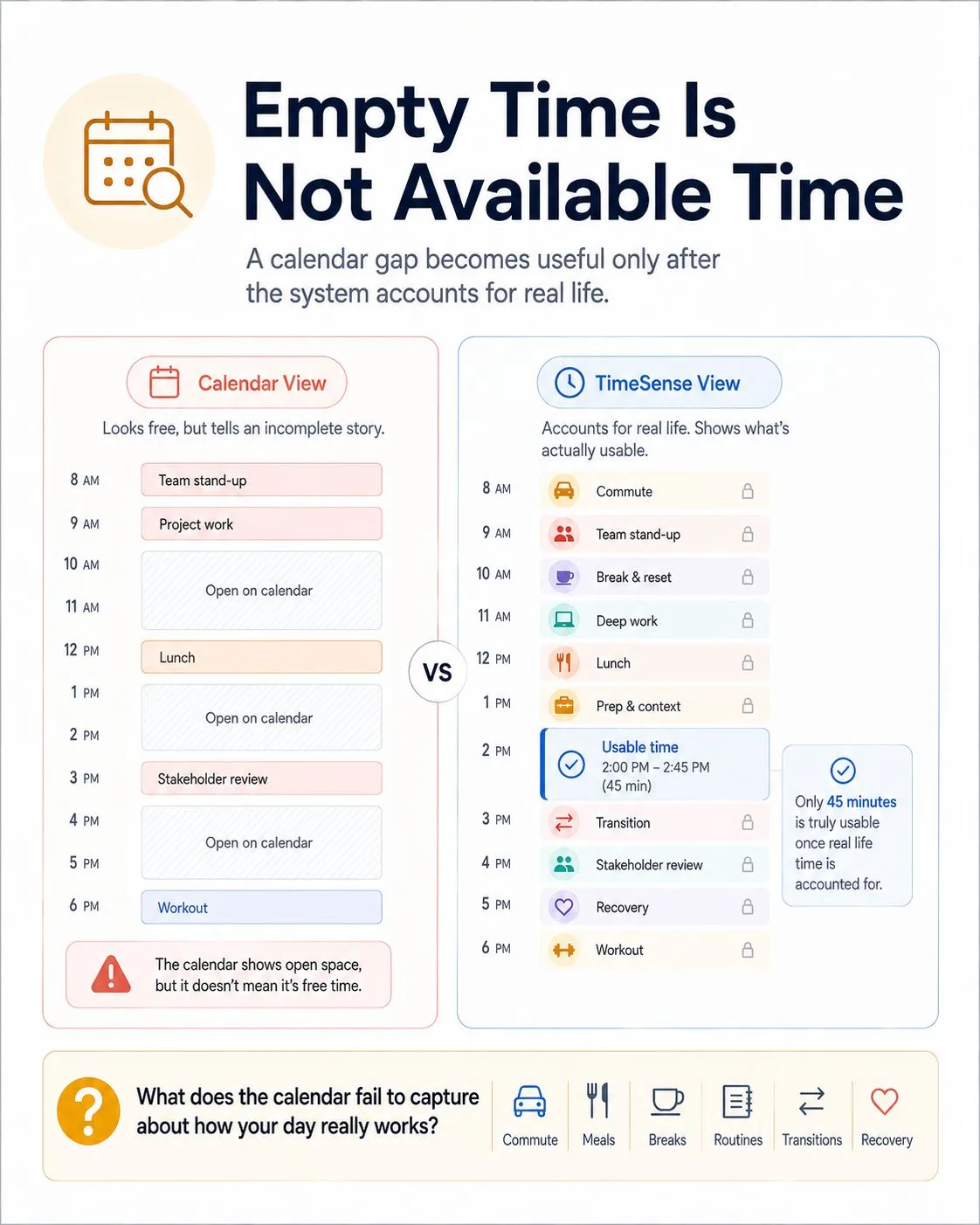
A 45-minute gap on a calendar does not necessarily mean someone has 45 minutes available.
They may need to commute, eat, prepare for the next meeting, recover from poor sleep or complete a routine that never appeared on the calendar.
That distinction became a core architectural principle in TimeSense:
Empty time is not the same as usable time.
The system treats meetings and scheduled work as busy blocks, then considers routines, task duration, health signals, commute risk and the next commitment before recommending what can realistically fit.
This is also why simply connecting a calendar was not enough. The calendar provides important structure, but it does not contain the full state of a person’s day.
The tradeoff is a more complex context model than a traditional scheduling application.
The benefit is that recommendations can reflect the day someone is actually having—not the idealized schedule stored in one system.
Originally posted on LinkedIn.