How I Defined Stage 1
· 1 min read · 0 views
I did not define Stage 1 of TimeSense as “a little bit of everything.”
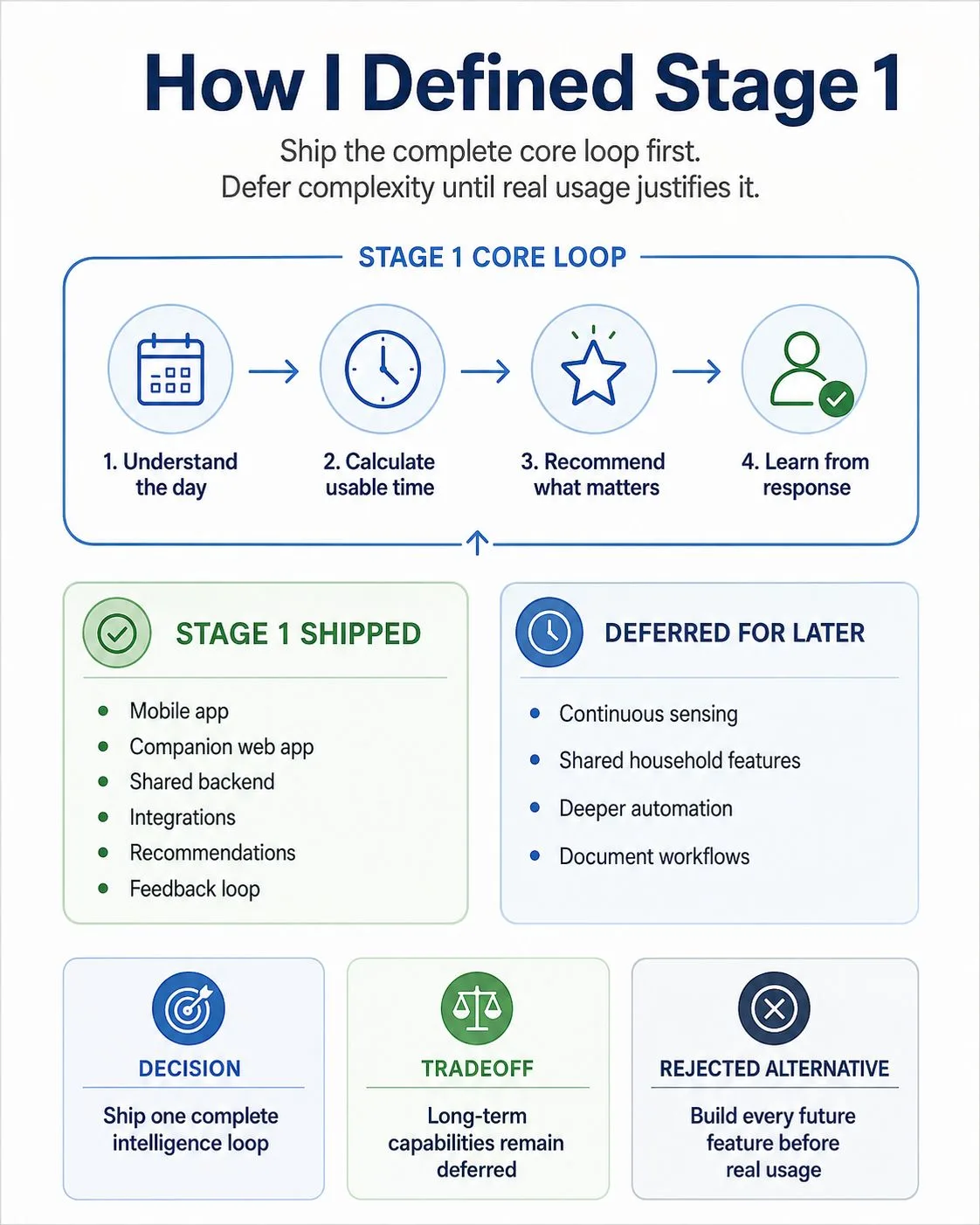
I defined it around one complete loop:
Understand the day → calculate usable time → recommend what matters → learn from the response.
That required a real mobile app, shared backend, calendar-aware planning, capture, recommendations, feedback, integrations, insights, authentication, privacy controls and a companion website.
Other ideas were deliberately deferred: continuous vision, broader ambient sensing, shared household features, document workflows and deeper automation.
Those are not missing pieces of Stage 1. They belong to later stages because they introduce different privacy, infrastructure and product problems.
The tradeoff is that TimeSense does not yet express the full long-term vision. The benefit is that the version on my phone today is coherent, integrated and useful.
A roadmap should not be a list of everything you can imagine. It should define the smallest complete system worth operating and learning from.
Originally posted on LinkedIn.