Stop Interviewing Software Engineers Like AI Doesn’t Exist
· 12 min read · 1 view
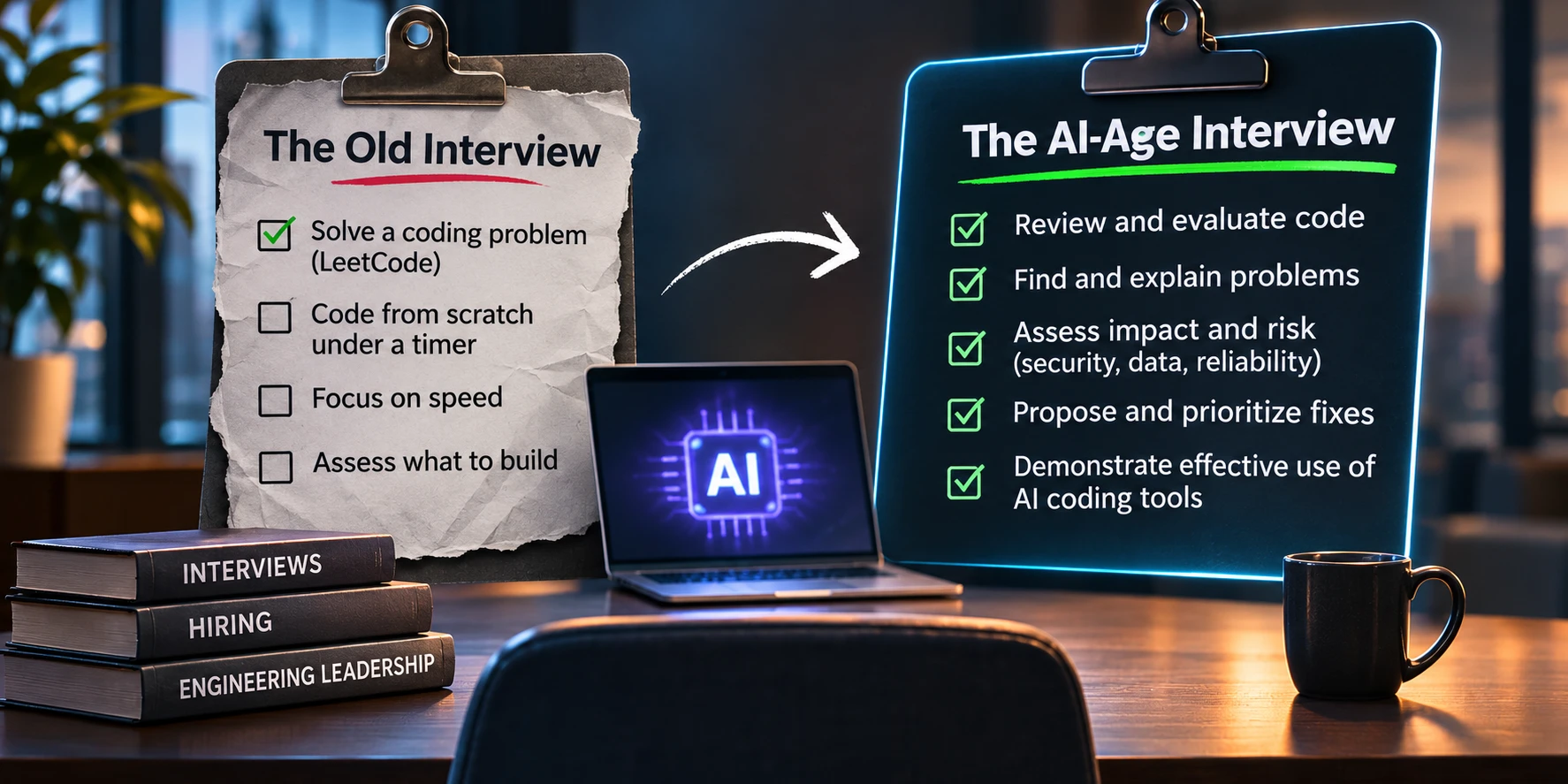
I've interviewed, hired, trained, and managed software engineers over the years, and I've been thinking about how we should conduct technical interviews now that AI has become such a significant part of software development.
I use AI when developing software, and I expect the engineers I hire to know how to use it effectively. However, I also need to know that they understand the code being generated and can recognize when something is wrong. AI can generate hundreds of lines of code in minutes, but the responsibility for that code still belongs to the engineer.
This is where I think our traditional approach to technical interviews needs to change.
I'm not particularly interested in whether an engineer can solve a LeetCode problem in 20 minutes unless that ability is directly relevant to the job I'm hiring them to do. I'm much more interested in whether I can trust that engineer to review code, identify problems, understand their implications, and make good technical decisions.
The typewriter analogy
Imagine hiring someone for a typing job when typewriters were the primary tool for producing documents. It would make perfect sense to test how quickly and accurately that person could type. Making corrections was tedious, and a single mistake could mean having to retype an entire page.
With the introduction of word processors, some of those skills became less important. You could easily correct mistakes, rearrange paragraphs, and use spellcheck. While being a fast and accurate typist was still valuable, it was no longer as important as it once was.
I think something similar is happening in software engineering.
An engineer who understands a problem, knows how to design a solution, and can properly evaluate an implementation can now produce software much faster with AI. But just as spellcheck cannot determine whether the content of a document is factually correct, an AI coding tool cannot guarantee that its implementation satisfies every requirement.
Software engineers still need to understand programming, algorithms, data structures, and software design. If anything, that knowledge becomes particularly important when reviewing large amounts of code that someone else, or something else, has generated.
What I question is whether our current interview practices place enough emphasis on that ability.
The problem with traditional coding interviews
I've never been particularly convinced that LeetCode is a good general measure of software engineering ability. There are certainly positions where solving complex algorithmic problems is a significant part of the job, and testing candidates on those skills makes sense.
However, for many software engineering positions, a substantial amount of the work involves understanding existing systems, implementing business requirements, debugging, reviewing code, and making decisions about how software should be designed and maintained.
Take-home coding assignments also have limitations. With the tools available today, a candidate can produce a fairly sophisticated application without necessarily understanding much of the implementation.
Some companies address this by asking candidates to walk through their submissions during the interview. While that helps, candidates can also use AI to study the code and prepare explanations before the interview. Depending on the size of the assignment, it can be difficult for the interviewer to determine how much of the application the candidate genuinely understands.
I would rather give candidates code they have never seen before and observe how they work through it.
How I would conduct the technical interview
Before the interview, I would ask candidates which programming language they are most comfortable with and prepare an exercise in that language. The underlying requirements and complexity should remain comparable regardless of the language selected.
The exercise would consist of a small application, preferably no more than three or four files. I would deliberately introduce five bugs and leave room for at least five meaningful improvements. The application should be complex enough to require some thought but small enough that a candidate can reasonably understand it during the interview.
I would spend the first ten minutes explaining what the application is supposed to do, its expected inputs and outputs, and any relevant business requirements. Candidates would have an opportunity to ask questions before reviewing the code.
During the review, I would allow candidates to use their preferred editor, debugger, language documentation, and testing tools. However, I would not allow them to use generative AI during this particular part of the interview.
Considering that the entire premise of this article is about adapting to AI, that might seem contradictory. But when an engineer uses AI to generate code, I need to know that the engineer has the technical knowledge to evaluate what the AI produces. Allowing AI to perform the entire review would make that difficult to assess.
I would also make these expectations clear to candidates before the interview so they know exactly what they are being assessed on.
An example of the exercise
Consider a simple invoice management application written in Python. The application takes a customer ID and returns the customer's outstanding balance along with a list of unpaid invoice IDs.
The requirements are straightforward:
- Only invoices belonging to the specified customer should be included.
- Only unpaid invoices, identified by an
openstatus, should be included. - The cost of each line item should be calculated by multiplying its unit price by its quantity.
- Invoice IDs should be sorted numerically in descending order.
- The specified limit should determine how many invoice IDs are returned. A limit of zero should return an empty list, but the outstanding balance should still reflect all qualifying invoices.
For this exercise, we can assume that prices are represented as whole-dollar amounts, quantities are positive, invoice IDs are numeric strings, and limits are nonnegative integers.
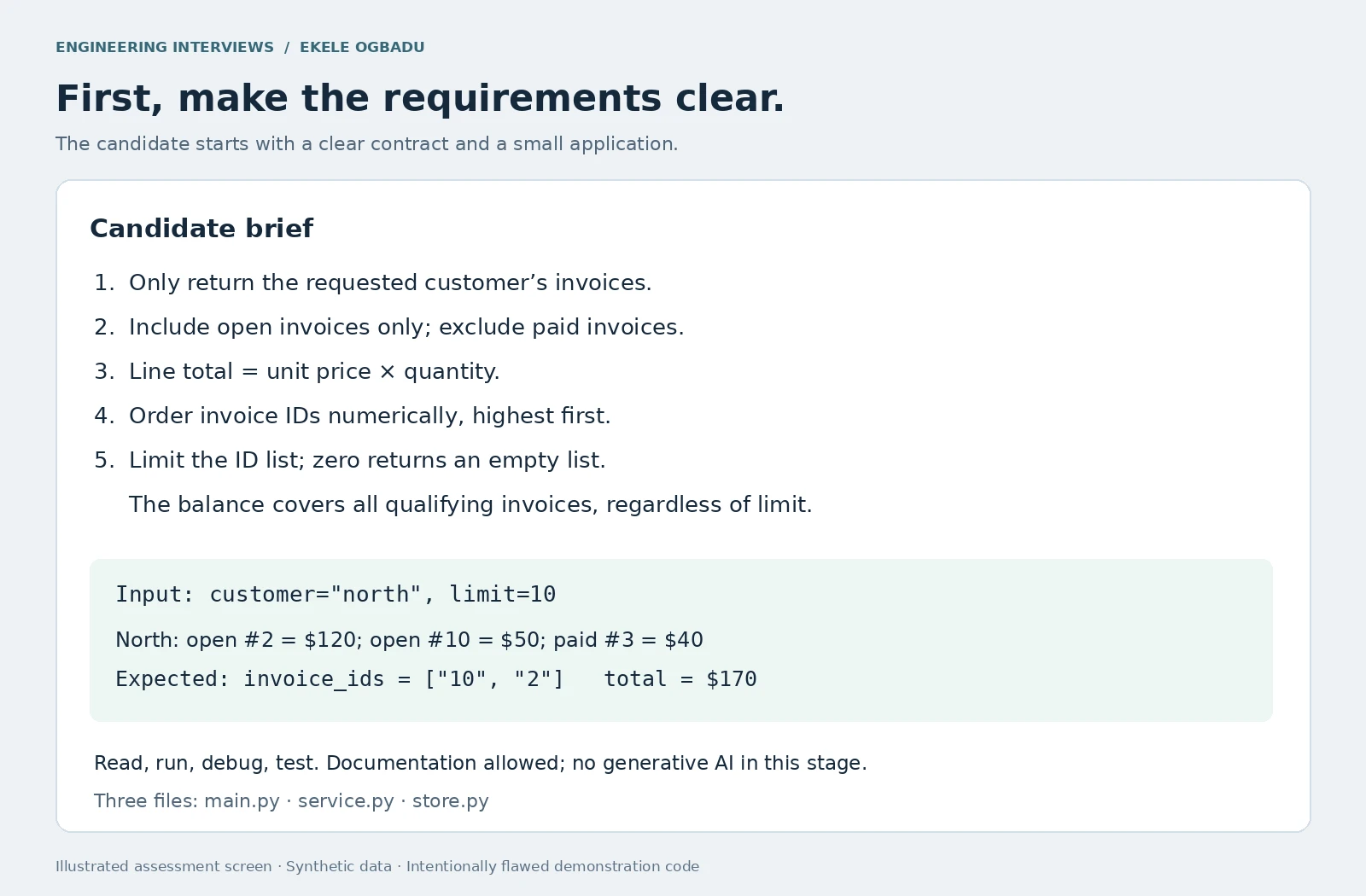
Figure 1. Application requirements and expected behavior.
Suppose Customer North has two outstanding invoices. Invoice 2 has a total of $120, and invoice 10 has a total of $50. The customer also has a previously paid invoice for $40. Another customer, Customer South, has an outstanding invoice for $900.
If we request Customer North's outstanding invoices with a limit of ten, we should get invoice IDs ["10", "2"] and an outstanding balance of $170.
Now consider the following implementation.
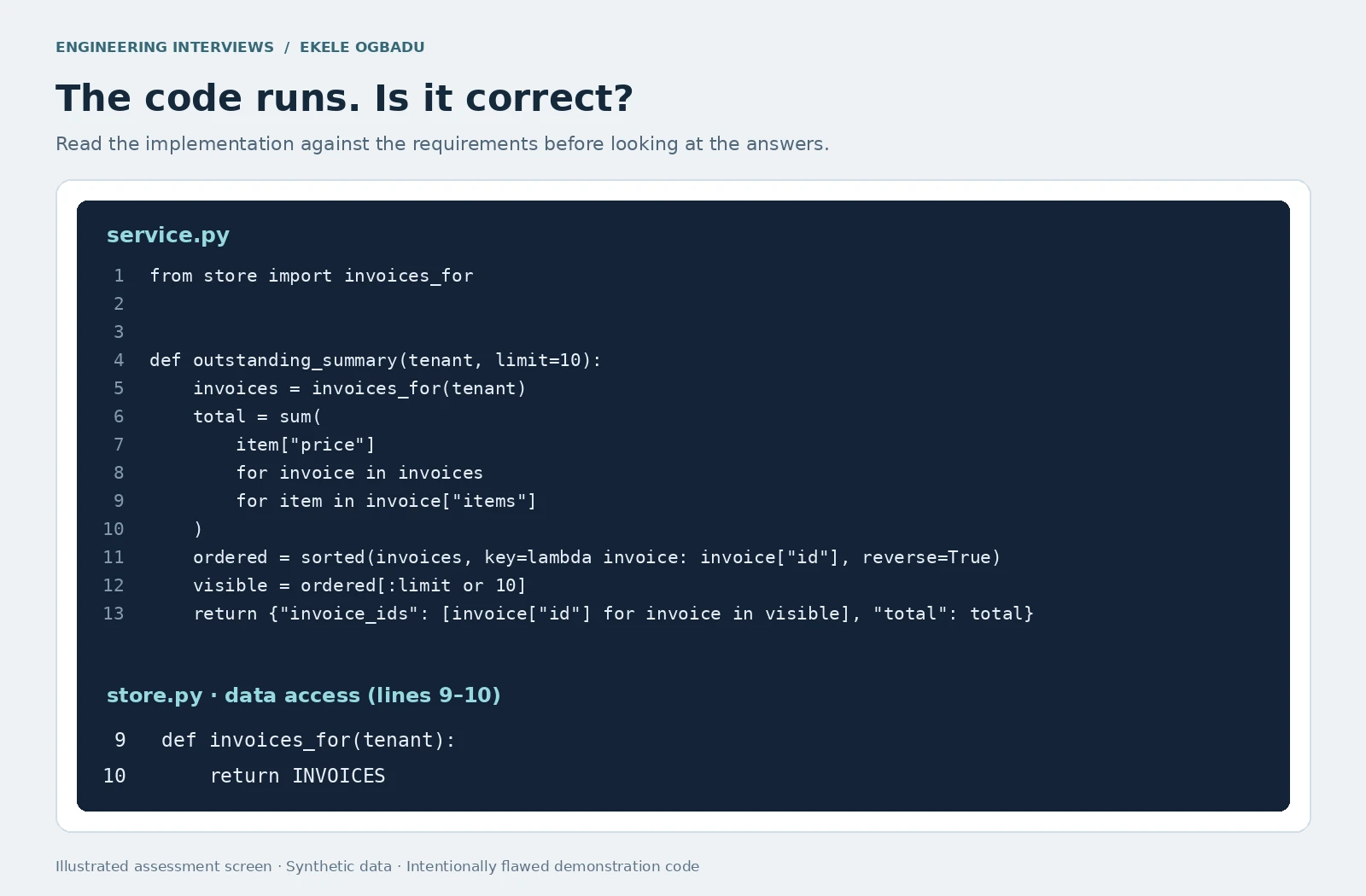
Figure 2. Deliberately flawed implementation of the invoice application.
The application runs without throwing an exception, but the result is incorrect.
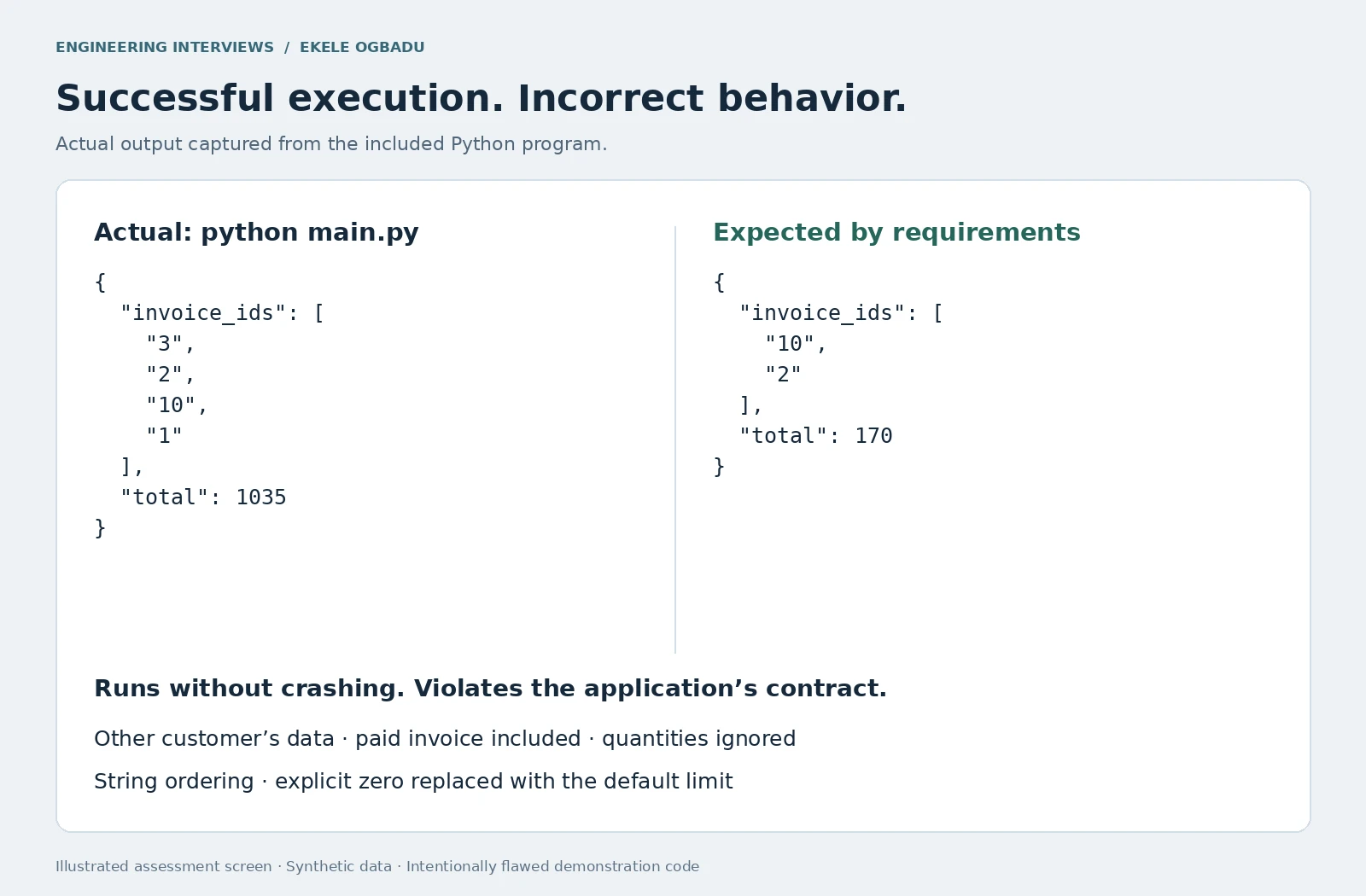
Figure 3. Actual application output compared with the expected output.
Instead of returning the two outstanding invoices and a balance of $170, the application returns four invoice IDs and a balance of $1,035.
There are five deliberate bugs in the implementation:
- The data retrieval function ignores the customer ID and returns invoices belonging to all customers.
- The application includes invoices that have already been paid.
- The outstanding balance is calculated by adding unit prices without accounting for quantities.
- Invoice IDs are sorted as strings rather than numbers.
- The expression
limit or 10causes a limit of zero to be incorrectly replaced with ten.
What makes this a useful exercise is that these bugs require different types of reasoning. Some require an understanding of the programming language, while others require an understanding of the business requirements and the consequences of implementing them incorrectly.
Take the first bug, for example. An engineer might identify that the customer ID is not being used and suggest adding a filter. That is a perfectly valid finding.
However, I would be particularly interested in a candidate who also recognizes that the application is exposing information belonging to other customers. Depending on where this application is deployed and what information is being returned, this could be a serious security and privacy issue.
I would expect that candidate to explain how they would fix the problem and how they would test the implementation to ensure that one customer could never retrieve another customer's invoices.
That discussion gives me a much better understanding of the candidate's engineering ability than simply recording that they found one of the five bugs.
How I would evaluate candidates
I would not determine the outcome of the interview solely by counting how many bugs a candidate finds.
Finding all five bugs would certainly be a good result, but I would also consider the candidate's understanding of each problem, the quality of their proposed solutions, their ability to prioritize issues, and how they intend to verify their fixes.
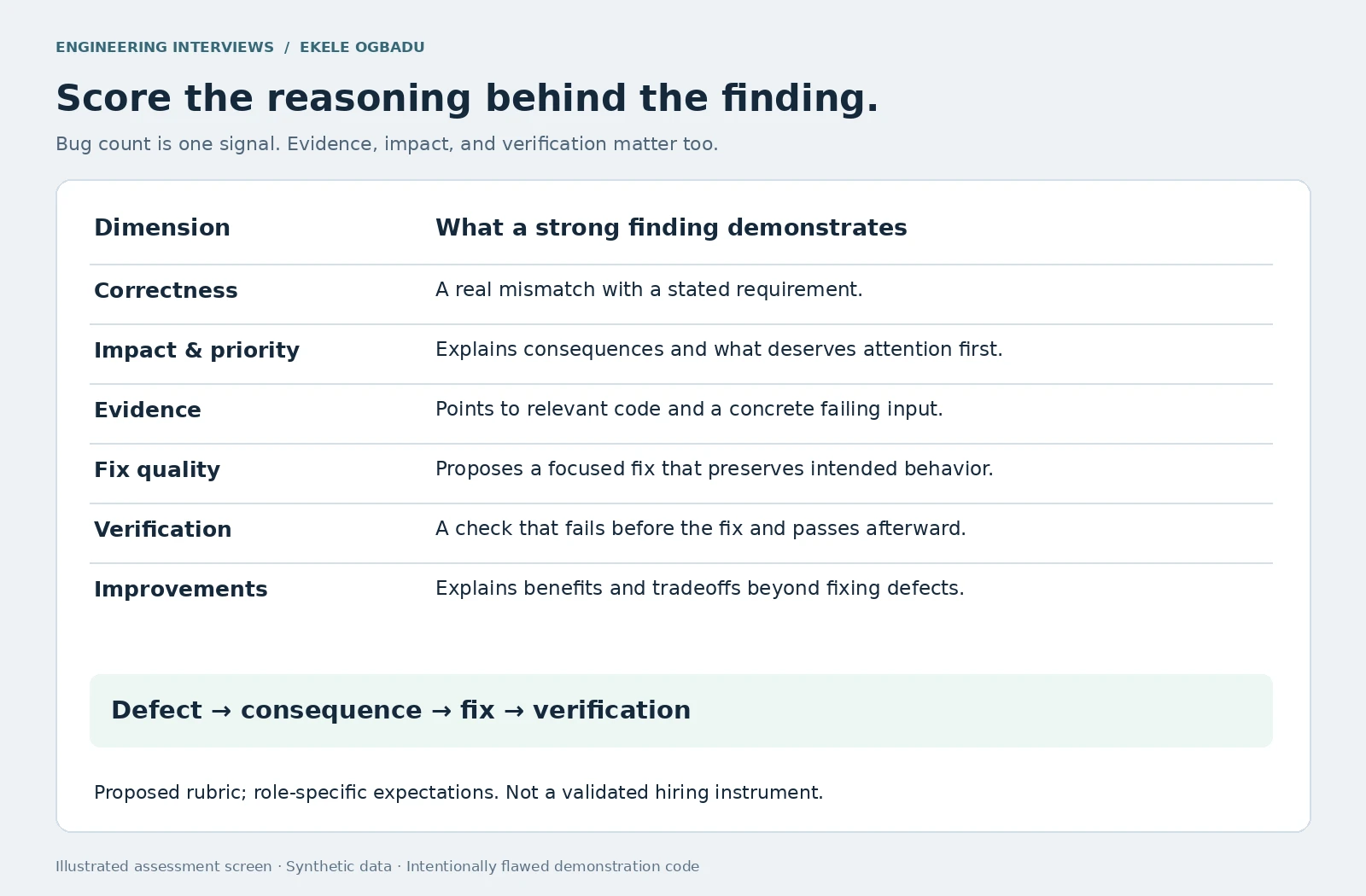
Figure 4. Proposed candidate evaluation rubric.
Once we have discussed the bugs, I would ask the candidate what else they would improve about the application.
Some candidates might recommend introducing regression tests. Others might suggest better type definitions, input validation, improved separation of responsibilities, or a more appropriate way of representing currency in a production environment.
There is no reason to expect every candidate to recommend the same improvements. In fact, this part of the interview could lead to some interesting discussions about software design.
If a candidate proposes a significant architectural change, I would want to understand why they believe it is necessary. A good engineer should also recognize when the complexity of a proposed solution is disproportionate to the problem being solved.
Naturally, my expectations would differ depending on the position.
For a junior engineer, I would be looking primarily for an understanding of the code, the ability to identify straightforward problems, and a reasonable explanation of how to fix them.
For a senior engineer, I would expect a more thorough understanding of the implications of those problems. I would also expect stronger reasoning about security, maintainability, testing, and engineering tradeoffs.
The exercise itself could be adjusted to reflect the experience and responsibilities associated with the position.
Assessing proficiency with AI coding tools
Since I expect engineers to use AI during their normal development activities, I would dedicate a separate portion of the interview to understanding how they use these tools.
Whether a candidate prefers Claude Code, Codex, or another coding assistant is less important to me than how they incorporate it into their development process.
Some of the things I would want to discuss include:
- How they provide an AI coding tool with sufficient context when working with an unfamiliar codebase.
- How they determine when to have the AI plan an implementation before allowing it to make changes.
- How they prevent an AI agent from making unnecessary changes outside the scope of a task.
- How they review and validate AI-generated code.
- Examples of situations where they disagreed with or rejected an AI-generated solution.
That last point is particularly interesting to me. I would like to hear about a real development problem where the candidate had to correct the AI, reject an implementation, or take a different approach altogether.
Someone who regularly works with these tools should be able to have a meaningful discussion about their limitations and the practices they have developed to work around them.
I would evaluate this separately from the code review exercise. Familiarity with an AI coding tool is valuable, but I would not assume that it demonstrates an ability to independently evaluate software.
Give engineers enough time to think
Another aspect of technical interviews that I would reconsider is the emphasis on speed.
When an engineer is reviewing a piece of software that could potentially introduce a security vulnerability or a significant production issue, I would rather they take the time to understand it properly than rush through it.
I would allocate between one and two hours for this type of interview, depending on the complexity of the application and the seniority of the position.
A 90-minute interview could be structured as follows:
| Activity | Duration |
|---|---|
| Application briefing and clarification of requirements | 10 minutes |
| Independent code review | 45 minutes |
| Discussion of bugs and proposed improvements | 20 minutes |
| Discussion of AI development practices | 15 minutes |
I would also give candidates the freedom to work quietly during parts of the exercise. Some engineers think better when they are not simultaneously trying to explain every thought to an interviewer.
We can discuss their reasoning afterward. If the majority of qualified candidates cannot meaningfully review the application within the allotted time, I would reconsider the complexity of the exercise rather than simply expect candidates to work faster.
Where do we go from here?
Code review and debugging exercises are not new approaches to technical interviews. What I am proposing is that we make them a more prominent part of how we assess software engineers, particularly on teams that rely heavily on AI-assisted development.
I would like to see this approach tested in actual hiring environments. It would be interesting to compare the performance of engineers hired through this process with those hired through more traditional coding interviews, particularly in areas such as code quality, defect detection, and effectiveness when working with AI coding tools.
Of course, a small code review exercise cannot tell us everything about an engineer. For some positions, we would still need to assess system design, architecture, collaboration, and experience operating production systems.
Even GitHub's documentation acknowledges that its AI-assisted code analysis features can miss issues, produce false positives, and suggest incorrect fixes. It recommends reviewing suggested fixes before applying them.[1]
As engineering leaders, we are increasingly giving our teams tools that allow them to produce software at a rate that would have been difficult to imagine a few years ago. We need to be equally concerned about whether our engineers have the knowledge and judgment to manage that increased output.
When I hire a software engineer, I am ultimately trusting that person with some responsibility for the quality, security, and reliability of the software my team delivers. Whether they write the code themselves or generate it with AI does not change that responsibility.
I think our technical interviews should reflect that.
Reference
[1] GitHub. Application card: GitHub security and quality AI features. Limitations and review requirements. Accessed October 14, 2026.
Originally posted on LinkedIn.