Why Calendar Meetings Are Read-Only Blocks
· 1 min read · 0 views
One of the most important corrections I made in TimeSense came from using the app on a real device.
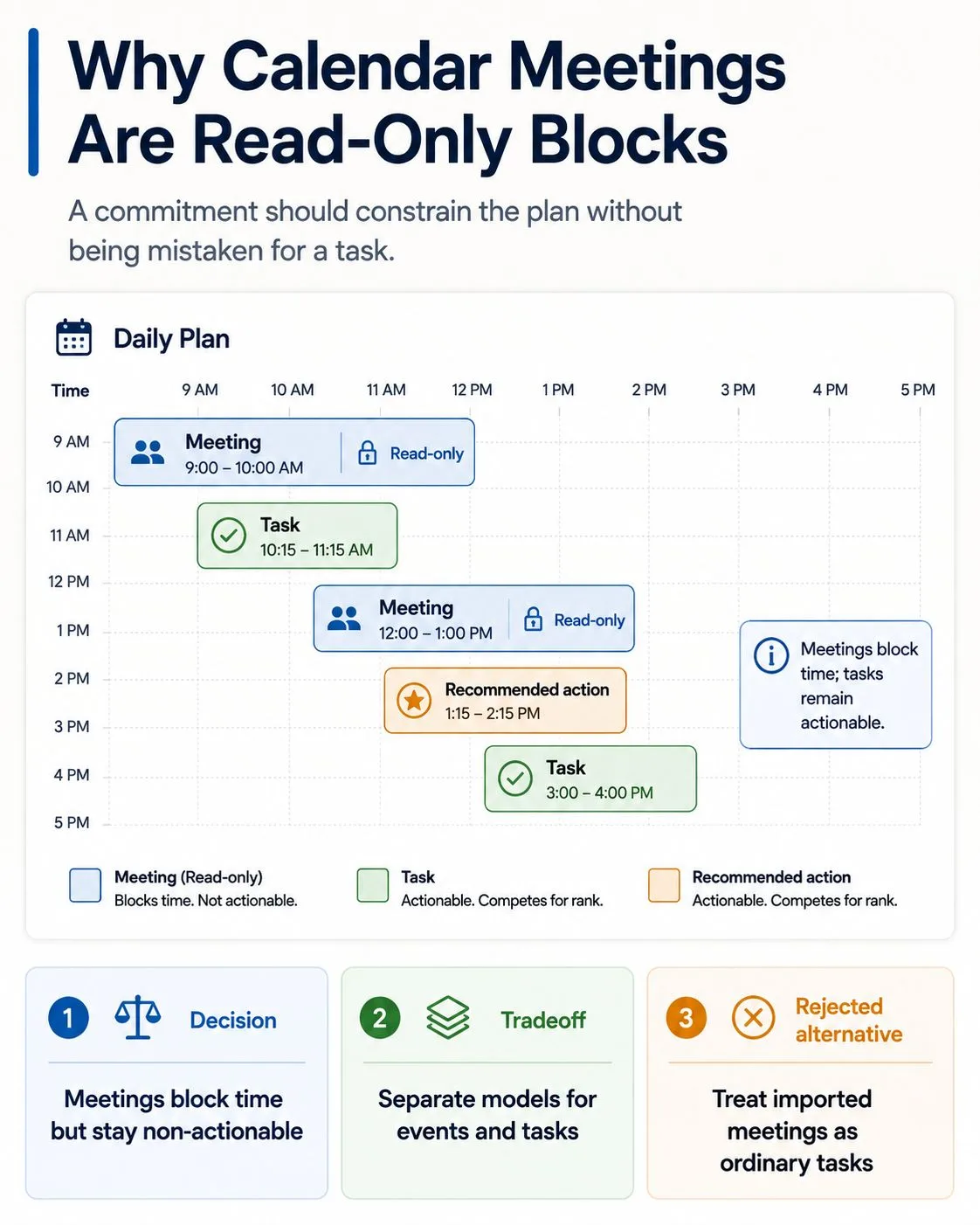
Calendar meetings were initially represented too much like tasks. That created contradictions: meetings could appear in task counts or compete with actual work recommendations.
The better model was to treat meetings as read-only blocks.
They occupy time. They influence usable-time calculations. They appear in the Smart Plan. But they are not actions the recommendation engine should tell the user to “do next.”
This separation also prevents double counting when calendar data is synchronized from multiple paths.
The tradeoff is maintaining distinct models for commitments and actionable tasks.
The benefit is a schedule that is more accurate, easier to trust and closer to how people understand their own day.
Real usage has a way of exposing conceptual errors that architecture diagrams cannot.
Originally posted on LinkedIn.