Why TimeSense Is Not Another Chatbot
· 1 min read · 0 views
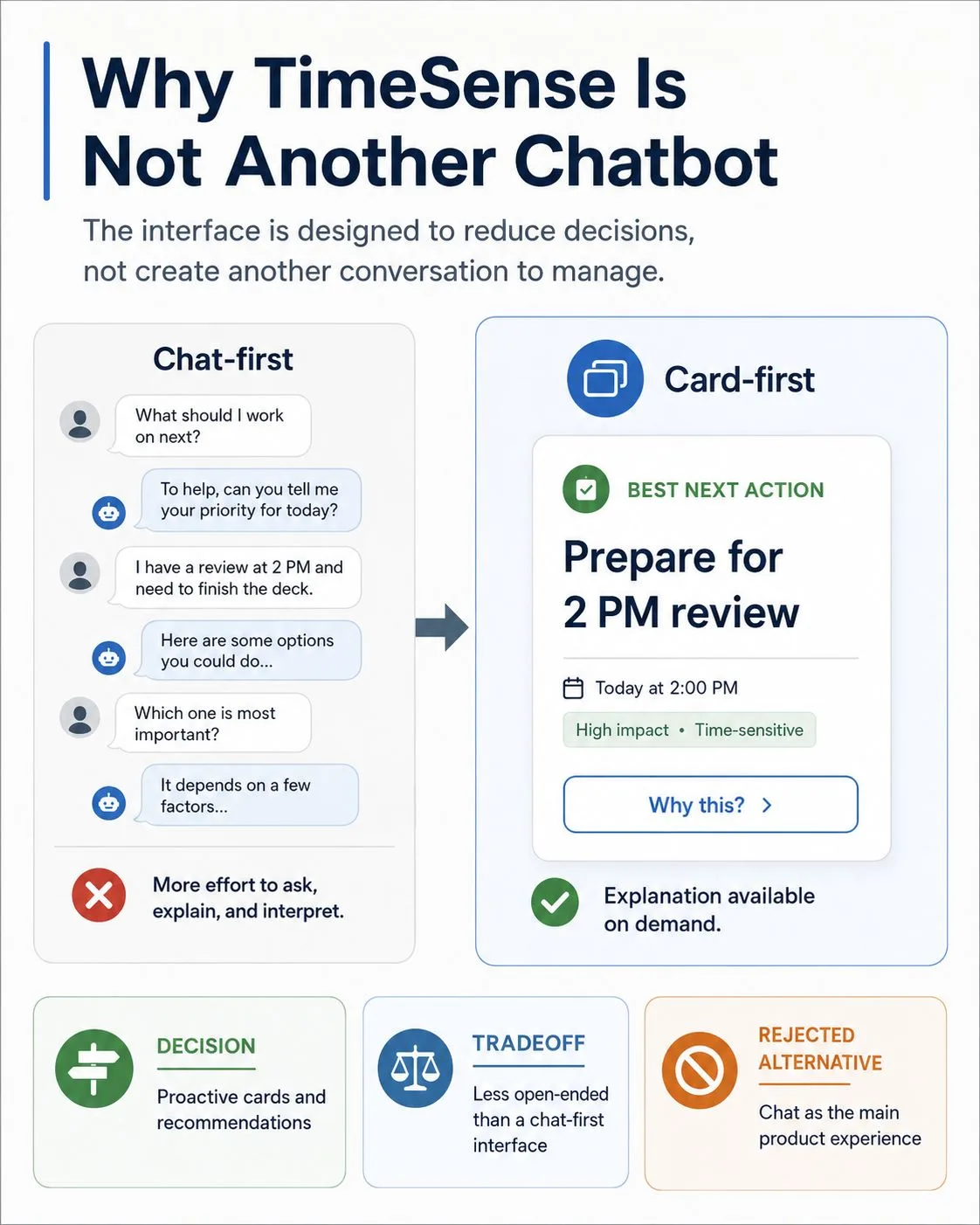
A major product decision in TimeSense was not to make chat the primary interface.
Chat is flexible, but flexibility can also create work. The user has to decide what to ask, explain context repeatedly and interpret a long response.
TimeSense is intended to do the opposite.
It gathers context, calculates usable time and presents the best next action as a simple card. Alternatives are available, and the explanation stays hidden until the user taps “Why this?”
There is still a role for natural language. Voice and text capture make it easy to add information, and the LLM helps interpret context and explain recommendations.
But the user should not need to conduct an interview with the system every time they want help.
The tradeoff is that a card-first experience is less open-ended than chat. The benefit is a calmer product that can become part of someone’s day without becoming another task to manage.
Originally posted on LinkedIn.